
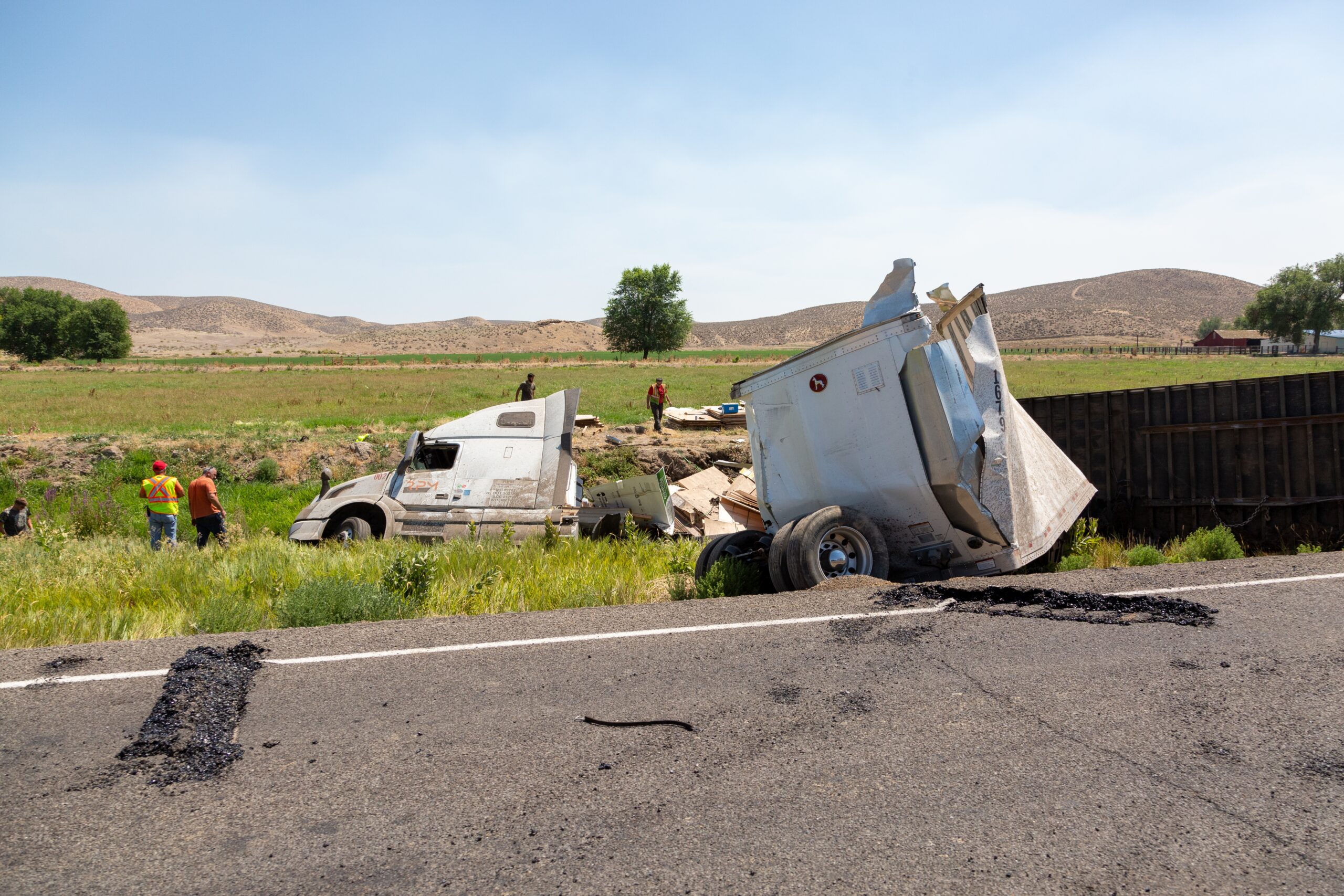
In most cases, the trucking company pays, not the person behind the wheel.
That is the first thing I tell anyone who calls a Coral Springs semi-truck accident lawyer after getting hit by an 80,000-pound rig.
Florida law lets you reach the carrier, and sometimes the company that loaded the trailer or owned it.
That matters, because the driver’s personal policy rarely covers commercial operation. The money sits with the business behind the truck.
Why the Trucking Company Pays and Not Just the Driver
Florida holds vehicle owners responsible for how their vehicles get driven.
Under the dangerous instrumentality doctrine, the owner of an inherently dangerous tool is liable for injuries caused by that tool’s operation, and the Florida Supreme Court extended that rule to motor vehicles decades ago.
A trucking company owns the tractor. That alone puts it on the hook.
There is a second path called respondeat superior. It makes an employer answer for what an employee does on the job. Carriers often argue their drivers are independent contractors to escape it.
Federal law blocks that move in interstate trucking by treating the carrier whose operating authority is being used as the statutory employer of the driver.
The same principle shows up in ordinary cases too, like a company vehicle crash during a business trip. Trucking just raises the dollar figures.
What a Coral Springs Semi-Truck Accident Lawyer Checks for Liability
I look for every party with a role in putting that truck on the road. Rarely is it only one. Here is the list I work through:
- The driver for speeding, fatigue, phone use, or an unsafe lane change.
- The motor carrier for hiring a driver with a bad record, skipping training, or pushing an illegal schedule.
- The trailer owner, which is often a different company than the tractor owner.
- The shipper or loading crew when cargo shifts, spills, or makes the trailer top heavy.
- The maintenance contractor for worn brakes, bald tires, or ignored inspection defects.
- The parts manufacturer when a component fails on its own.
Each one carries its own insurance. Finding all of them is how a modest claim turns into a full recovery. It starts with proving negligence against the right defendant, not the easiest one.
How Much Insurance a Tractor-Trailer Actually Carries
Federal minimums are far higher than car policies. The Federal Motor Carrier Safety Administration sets minimum financial responsibility levels under 49 CFR Part 387, reaching $5,000,000 for certain hazardous cargo.
General freight carriers running vehicles over 10,001 pounds in interstate commerce must hold at least $750,000, and most brokers demand $1 million before they will book a load.
Compare that to Florida’s $10,000 in personal injury protection. PIP disappears after one ambulance ride and an MRI. Many drivers only find this out after the fact, which is exactly the full coverage myth I write about often.
If the truck was uninsured, underinsured, or fled the scene, your own policy becomes the backstop. That is why I push people to carry real uninsured motorist coverage before anything happens.
Two Florida Rules That Can End Your Claim Early
Two changes from Florida’s 2023 tort reform law decide many truck cases before the facts ever get argued. The statute of limitations for negligence dropped from four years to two years, and Florida moved to a modified comparative negligence standard with a 51% bar.
The second rule is the dangerous one. Any party found more than 50% at fault for their own harm recovers nothing at all. Under the old system, that same person still collected a reduced share. Carrier insurers know this, and they build a blame case against you from day one.
Time pressure is real too. Two years sounds long until you spend eighteen months in treatment. I have watched strong cases die because someone waited, which is why there really is a limited time to sue.
The Evidence That Settles Who Pays
Truck cases turn on records the company controls. Electronic logging devices, engine control module data, dispatch messages, weigh tickets, drug test results, and maintenance files all sit on their servers. Some of it can be overwritten in weeks.
A preservation letter goes out immediately in my cases. Without it, the black box data from the crash may be gone before anyone asks. Careless early moves on your side hurt as well, and most of the mistakes that hurt claims happen in the first two weeks.
Damages need proof too. Serious truck injuries often require lifetime care, and a life care plan puts a real number on future surgeries, therapy, and equipment.
Non-economic losses matter just as much, and Florida has specific rules on pain and suffering that shape what a jury may award.
Putting the Right Companies on the Hook After a Tractor-Trailer Crash
The driver who hit you is usually the smallest piece of the answer. The carrier, the trailer owner, the loader, and the maintenance shop all carry policies that dwarf a normal auto claim.
Get the DOT number, get medical care, and get someone requesting the electronic records before they cycle out.
The sooner that happens, the more of the truth survives.