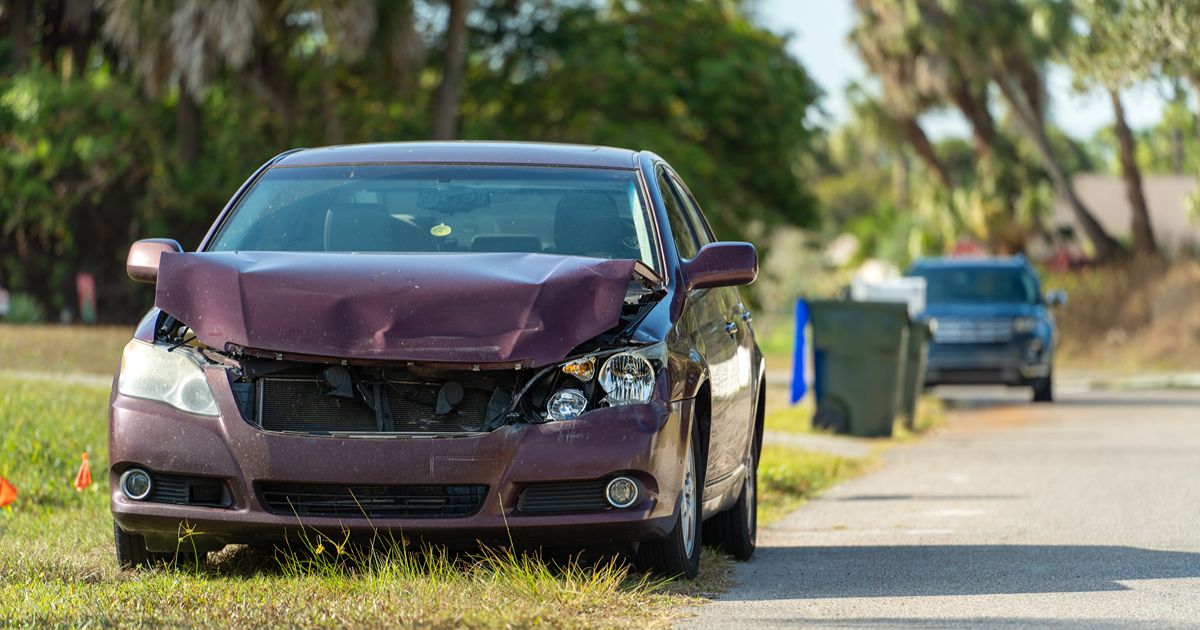
Fault in a Loxahatchee Road crash usually comes down to one question: which driver broke a rule of the road first?
As a car accident lawyer serving Parkland families, I can tell you the answer on Lox Road often turns on details other roads don’t have.
A narrow two-lane layout, a canal on one side, new roundabouts, and years of lane shifts all change who had the right of way.
Under Florida law, that fault split decides whether you recover anything at all.
Why Loxahatchee Road Crashes Turn Into Fault Fights
Loxahatchee Road runs about six miles, from State Road 7 west to the Arthur R. Marshall Loxahatchee National Wildlife Refuge. For much of that stretch, the Hillsboro Canal sits along the north side.
There is little room to recover from a mistake. Local reporting describes a truck that went into the canal and a fatal crash in the 11900 block that started when a pickup drifted into the oncoming lane.
The road still reflects Parkland’s rural roots. Commercial trucks share the lanes with school and commuter traffic. A crash between a roofing truck and a pickup near Parkside Drive killed one person and hurt three others.
Truck crashes often involve a company and its insurer, not just a driver, so it pays to understand the risks of driving near big trucks.
Who’s at Fault When a Driver Passes on a Two-Lane Stretch?
The passing driver is usually at fault. Florida Statute § 316.085 lets a driver cross the center line only when the oncoming lane is clear far enough ahead to pass safely.
The driver must return to their own lane before coming within 200 feet of an oncoming vehicle.
Lox Road tempts impatient drivers. Parkland Talk reported a crash in the 7500 block where a young driver pulled out to pass a slower car and struck a westbound motorcycle. Both riders went to the hospital.
The passing driver’s insurer may still argue the rider was speeding or hard to see.
Florida’s comparative negligence rules for motorcyclists let a jury reduce your award by your share of fault.
That is why speed data, scene photos, and witness names matter in the first few days.
Who Has the Right of Way at the New Lox Road Roundabouts?
Traffic already in the roundabout has the right of way. Drivers entering the circle must yield, according to FDOT’s roundabout guidance. A driver who pulls in and hits a car already circling is usually the one at fault.
The Parkside Drive roundabout opened on August 8, 2026. Roundabouts at University Drive and Nob Hill Road are part of the same project. Many drivers are still learning them. Two crash patterns come up most:
- Failure to yield at entry. The entering driver misjudges the gap and hits a car in the circle.
- Rear-end crashes at the yield line. One driver stops to yield, and the car behind keeps going. Florida presumes the rear driver was negligent. In Birge v. Charron, 107 So. 3d 350 (Fla. 2012), the Florida Supreme Court held that this presumption can be rebutted with evidence, such as a sudden, unexpected stop.
Once the project is done, Lox Road will have five-foot bike lanes with two-foot buffers. Cyclists in those lanes count as traffic.
Our post on bike lane crash rules explains how fault works when a driver cuts across one.
Can a Contractor or FDOT Share Fault for a Work Zone Crash?
Sometimes. A contractor that sets up a confusing lane shift, leaves out warning signs, or lets markers fall may share the blame.
Most work zone crashes, though, still trace back to a driver who went too fast or ignored the signs.
Construction began October 30, 2023. The Florida Department of Transportation lists completion in early 2027.
Drivers have dealt with full closures, detours onto Holmberg Road, and traffic squeezed into one lane. Walkers and cyclists have been barred from the road during construction.
FDOT scheduled the stretch from Parkside Drive to State Road 7 to stay closed through fall 2026.
Caps do not apply to a private contractor. But Florida law can shield a contractor that followed FDOT’s approved plans.
Photos of the signs and cones on the day of the crash are often the only proof of what the work zone looked like.
What a Parkland Car Accident Lawyer Checks Before Arguing Fault
Before any fault fight, we lock down three things: the crash report, your share of fault, and every source of coverage. Each one can change the value of a Lox Road claim.
- The crash report. In Parkland, the Broward Sheriff’s Office usually writes it. Under § 316.066(4), the accident report privilege keeps what drivers tell the deputy for that report out of trial. Witness statements are not covered. Reports also contain errors, and when police reports miss the facts, other evidence can correct the record.
- Your share of fault. Florida’s comparative fault statute bars recovery if you are more than 50 percent at fault. At 30 percent, your award drops by 30 percent.
- Coverage. Your own PIP pays first, up to $10,000, no matter who caused the crash, as long as you get care within 14 days. Many drivers learn about the full-coverage myth only after a crash. Night crashes add risk. BSO investigated a 13300 block crash as a DUI case after two people were seriously hurt. If a drunk driver hit you, that driver’s policy limits may not cover your losses.
If the other driver denies fault, or a truck or work zone was involved, talk to a lawyer before you give any recorded statement.
Lock Down Your Lox Road Fault Evidence Early
Fault on Loxahatchee Road is rarely settled at the scene. Settlement often comes from photos, witness names, vehicle data, and meeting the two-year deadline.
If you or someone you love was hurt, talk with a Parkland personal injury lawyer from our firm.
Call (954) 913-2273 for a free consultation, and bring your crash report number and any photos you took.